QR-Code dieser Seite

Origins & Tasks

The EU Institutional Background
Since 1975, the European Union has set up a number of decentralised agencies to carry out technical tasks on behalf of the European Commission and the Member States. During the late 1990s and early 2000s, the idea was mooted to set up a number of specialised agencies in the transport arena. These agencies would carry out tasks in areas where it was felt that cooperation and coordination on common European projects would add value. Today, EU agencies exist in the transport fields of aviation (EASA), railways (ERA) and maritime transport (EMSA).

The Setting Up of EMSA
The concept of a European Maritime Safety Agency (EMSA) as a regulatory agency originated in the late 1990s along with a number of other major European maritime safety initiatives. EMSA was established by Regulation (EC) 1406/2002* as a major source of support to the Commission and the Member States in the field of maritime safety and prevention of pollution from ships, and subsequent amendments have refined and enlarged its mandate.

A major political impetus to the setting up of EMSA in 2003 was the fallout from the Erika (1999) and the Prestige (2002) accidents and their resulting oil spills. These incidents resulted in huge environmental and economic damage to the coastlines of Spain andFrance. They also acted as a reminder to decision-makers that Europe needed to invest in better preparation for a large-scale oil spill, i.e. above-and-beyond the resources available at individual Member State level.

Today, over a third of EMSA's budget is spent on oil spill preparedness and response activities, including the setting up of a network of stand-by oil response vessels and state-of-the-art equipment, which are available on demand to assist Member States. Following investment by EMSA, in addition to investment at the Member State level. Today, if a major oil spill were to occur, the EU would be better prepared. The recent Deepwater Horizon accident in the Gulf of Mexico (2010) has, once again, demonstrated that, in the event of a major marine pollution incident, investment in preparedness can pay dividends: in terms of faster response times, availability of people and equipment, and the ability to tackle oil spills at sea before they reach the coastline.

EMSA's Objectives
The objectives of the Agency are addressed through a matrix of mainly preventive, but also reactive, tasks in a number of key areas. Firstly, the Agency has been tasked with assisting the Commission in monitoring the implementation of EU legislation relating, among others, to ship construction and planned maintenance, ship inspection and the reception of ship waste in EU ports, certification of marine equipment, ship security, the training of seafarers in non-EU countries and Port State Control. Secondly, the Agency operates, maintains and develops maritime information capabilities at EU level. Significant examples are the SafeSeaNet vessel tracking system, to enable the EU-wide tracking of vessels and their cargoes; and the EU LRIT Cooperative Data Centre, to ensure the identification and tracking of EU flagged ships worldwide. 

In parallel, a marine pollution preparedness, detection and response capability has been established, including a European network of stand-by oil spill response vessels as well as a European satellite oil spill monitoring and vessel detection service (CleanSeaNet), both with the aim of contributing to an effective system for protecting EU coasts and waters from pollution by ships.

Finally, the Agency provides technical and scientific advice to the Commission in the field of maritime safety and prevention of pollution by ships in the continuous process of evaluating the effectiveness of the measures in place, and in the updating and development of new legislation. It also provides support to, and facilitates co-operation between, the Member States and disseminates best practices. As a body of the European Union, the Agency sits at the heart of the EU maritime safety network and collaborates with many industry stakeholders and public bodies, in close cooperation with the Commission and the Member States.


* Regulation (EC) No 1406/2002 of the European Parliament and of the Council of 27 June 2002 (OJ L 208, 5.8.2002, p.1), as amended by Regulation (EC) No 1644/2003 of the European Parliament and of the Council of 22 July 2003 (OJ L 245, 29.9.2003, p. 10), Regulation (EC) No 724/2004 of the European Parliament and of the Council of 31 March 2004 (OJ L 129, 29.4.2004, p. 1) and Regulation (EC) No 2038/2006 of the European Parliament and of the Council of 18 December 2006 (OJ L394, 31.12.2006, p.1).

EMSA in a Nutshell

  • newsbulletTagline: Quality shipping, safer seas, cleaner oceans
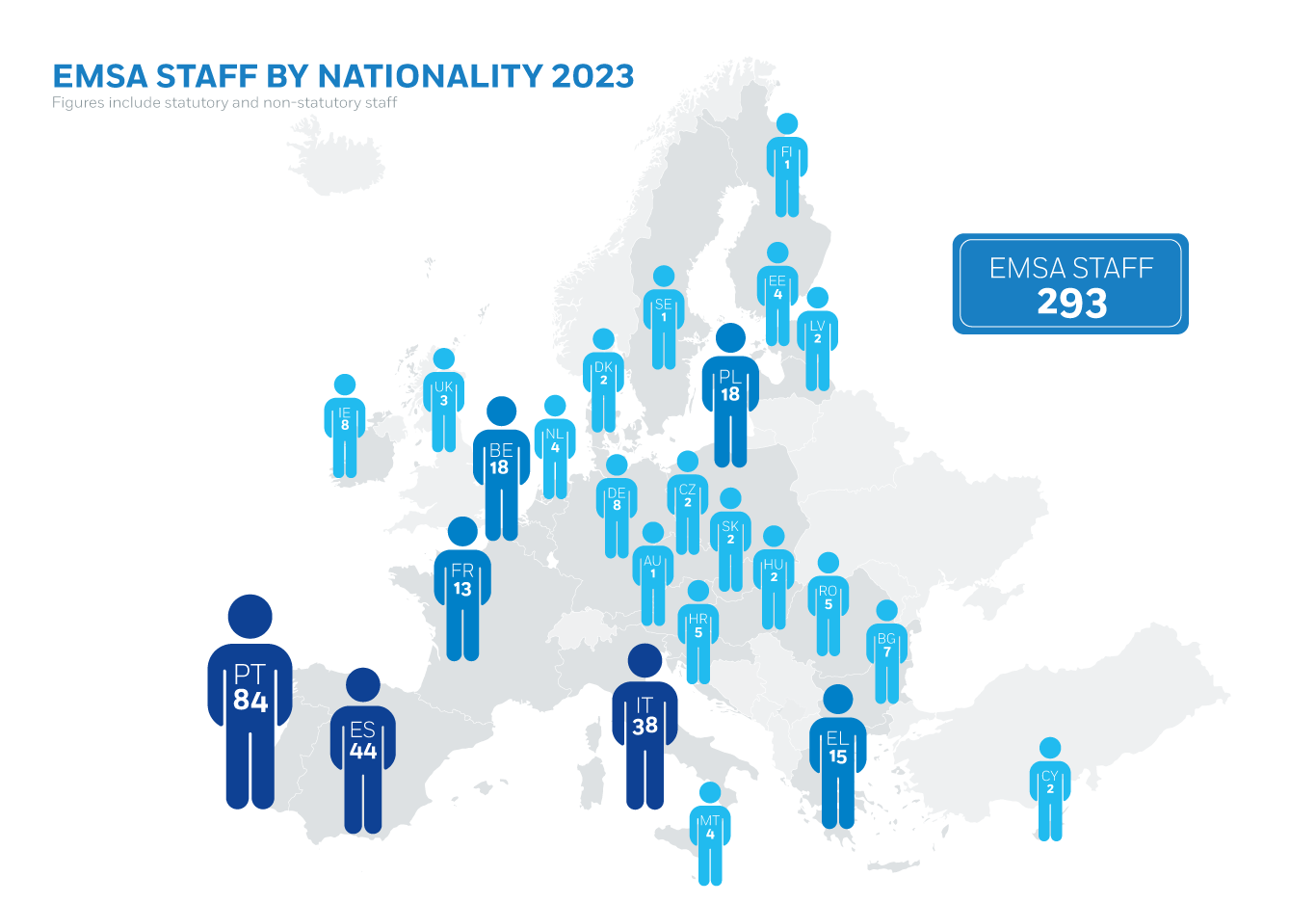
  • newsbulletSet up in 2002, over 240 employees
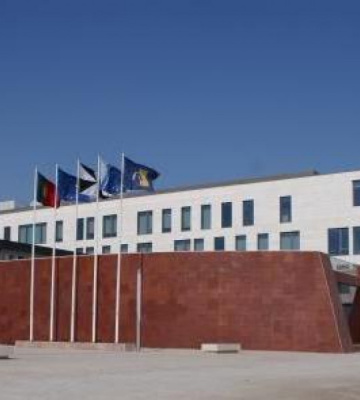
  • newsbulletHeadquartered in Lisbon, Portugal
  • newsbulletAnnual budget (2012): €55.4 million
  • newsbulletOne of 29 agencies of the European Union

EMSA Brochures

EMSA summary in 20 languages

cs da de et el en es fr it lv
hu lt mt nl pl pt sk sl fi sv