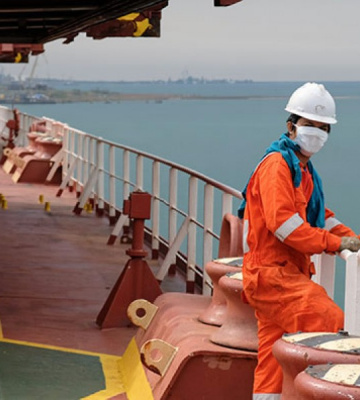
Human Element in Shipping
EMSA provides assistance to the European Commission and the EU Member States on a range of activities that come under the umbrella of the human element in shipping.
In support of EMSA inspection and visit tasks concerning standards for seafarers, an STCW Information System (STCW-IS) has been developed. The system provides data on maritime administrations and maritime education and training institutions in the EU, including maritime programmes, student and graduate numbers. It also provides numerical information on certificates of competency, proficiency and endorsements attesting the recognition of certificates issued by EU Member States. The objective is to publish accurate, up-to-date information each year on the number of seafarers available for employment on EU-registered vessels, as well as on all countries where they were educated, trained and certified.
Based on the data provided by Member States on an annual basis, EMSA publishes an annual EU seafarers’ statistical report or pamphlet, as appropriate.
The International Maritime Organization (IMO) is in the process of carrying out a Comprehensive Review and Revision of the STCW Convention and Code. EMSA is making a significant contribution to this exercise by participating in the drafting of submissions, IMO meetings, the COSS working group on seafarers’ training, workshops and others meeting organised during the course of the work.
EMSA also designs training courses to be delivered in-person or online concerning the STCW Convention, Directive (EU) 2022/993 or the MLC, 2006.
In respect of the MLC, 2006 in particular, EMSA provide technical assistance to EU Member States and beneficiary countries on its implementation by facilitating training courses for flag State and port State inspectors, raising awareness about compliance and supporting the European Commission within the context of the International Labour Organization (ILO) as regards seafarers’ living and working conditions.
Other activities include organising meetings and other events that relate to the human element in shipping and undertaking studies and projects on seafarers’ education, training and maritime careers. The most recent of these have concerned:
- the identification of specific competences for seafarers on ships using alternative fuels (TRAINALTER); and
- the development and implementation of an EU Seafarers’ Certification Platform, which aims to facilitate the issue of e-certificates to seafarers by the Member States as well as to be a central point that allows for the search and verification of authenticity of certificates issued.
Related Documents
- Seafarer Statistics in the EU - Statistical review (2024 data STCW-IS)
- Seafarer Statistics in the EU - Statistical review (2023 data STCW-IS)
- TRAINALTER - Study on the identification of specific competences for seafarers on ships using alternative fuels and energy systems
- Seafarer Statistics in the EU - Statistical review (2022 data STCW-IS)
- CMOROC Final Report - Identification of Competences for MASS Operators in Remote Operations Centres
- Seafarer Statistics in the EU - Statistical review (2021 data STCW-IS)
- Seafarer Statistics in the EU - Statistical review (2020 data STCW-IS)
- Seafarer Statistics in the EU - Statistical review (2019 data STCW-IS)
- Seafarer Statistics in the EU - Statistical review (2018 data STCW-IS)
- Seafarer Statistics in the EU - Statistical review (2017 data STCW-IS)
- Seafarer Statistics in the EU - Statistical review (2016 data STCW-IS)
- Seafarer Statistics in the EU - Statistical review (2015 data STCW-IS)
- Seafarer Statistics in the EU - Statistical review (2014 data STCW-IS)
Recently Published - Human Element in Shipping