
High North
Italy
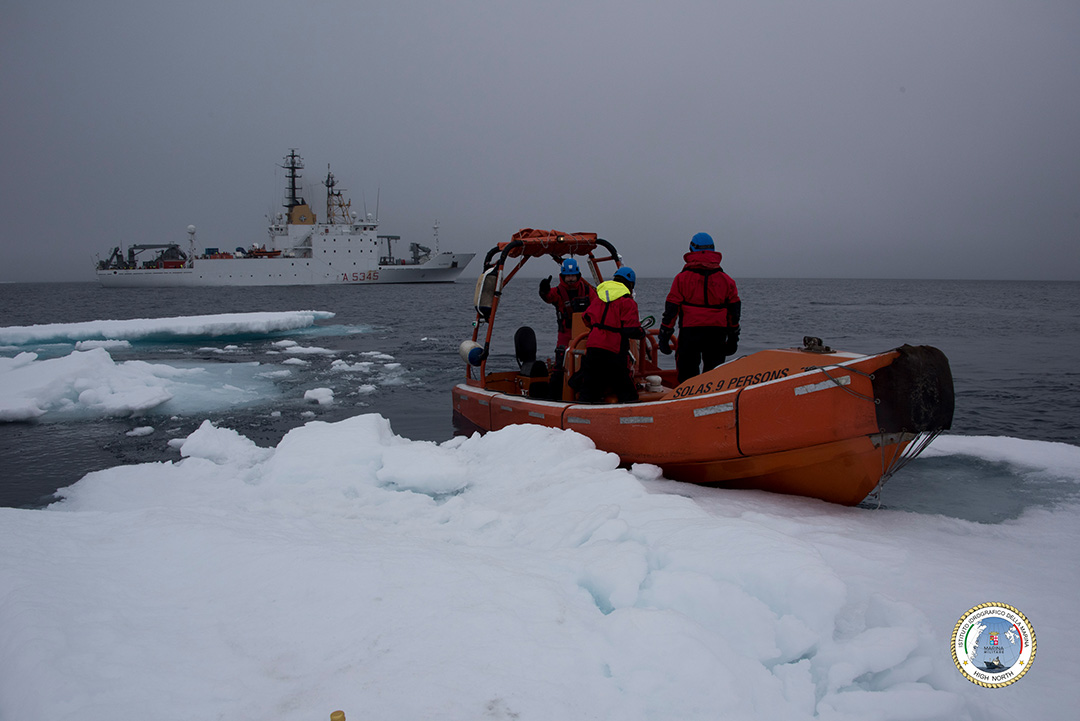
The Arctic maritime domain is one of the most fragile and least explored environments on our planet. But in this region, the HIGH NORTH programme – a multi-year Arctic research initiative led by the Italian Navy and scientifically and operationally coordinated by the Italian Hydrographic Institute — integrates hydrography, oceanography, marine geology, and environmental monitoring to improve knowledge of the Arctic marine environment and enhance safe navigation.
Through open data sharing, international cooperation, pollution research, and hands-on training of ocean professionals, the project promotes environmentally sustainable and responsible maritime operations in the Arctic.
Through systematic mapping of seabed, studies of water mass properties, and monitoring of ocean circulation, HIGH NORTH contributes to a more accurate and complete picture of Arctic conditions. These data enhance maritime safety, help to protect human life at sea and reduce environmental risks.
The HIGH NORTH project is collaborative by nature. All collected hydrographic and environmental data are shared annually with the Norwegian Charting Authority, the General Bathymetric Chart of the Oceans (GEBCO)/ International Bathymetric Chart of the Arctic Ocean (IBCAO) global mapping initiative, as well as national and international scientific partners. This open sharing avoids duplication of effort, maximizes the impact of fieldwork, and contributes to collective environmental stewardship of the Arctic Ocean.
Beyond its scientific and operational achievements, HIGH NORTH has evolved into a comprehensive Education and Training platform, fostering new generations of ocean professionals. Over the years, the program has hosted and trained university students, master’s candidates, PhD researchers, and professional hydrographers from the Italian Navy, as well as participants selected through the Early Career Ocean Professionals (ECOP) initiative under the United Nations Ocean Decade framework.
In this way, young researchers get hands-on experience in polar navigation, oceanographic data acquisition, and sustainable marine research practices. This educational component ensures long-term continuity of expertise, strengthens international scientific cooperation, and contributes to building a more environmentally aware maritime community.