
Tag: OPR
-
Major Oil Pollution Response Exercise Conducted off the Belgian Coast within MMO MSNS 2026
Published30.06.2026
On 17 June, seven Belgian, Dutch and EMSA vessels carried out a major oil pollution response exercise off the coast of Zeebrugge, testing how partners would contain and recover a large oil slick before it could reach sensitive areas such as the Zwin Nature Reserve and the Scheldt estuary. Aircraft and RPAS detected and monitored the slick, vessels moved into formation, and sweeping arms and ...
Read more... -
EMSA OPR Vessels, EAS and MAR-ICE - Activities Report 2025. Sustainability and Technical Assistance
Published10.04.2026
The European Maritime Safety Agency (EMSA) supports EU coastal states in responding to pollution from ships and offshore oil and gas activities. It provides a range of response services, including pollution response vessels, oil storage, dispersant stockpiles, and equipment assistance. These resources are available to EU and some non-EU countries upon request. To maintain readiness, EMSA ...
Read more... -
New Study on biodiesel-bunker fuel blends as marine pollutants
Published24.02.2026
A new study on blends of biodiesels with conventional marine bunker fuels has been commissioned by EMSA to address critical knowledge gaps concerning alternative fuels as potential marine pollutants, as well as the effectiveness of response measures in the event of accidental releases. Among the alternative fuels currently being deployed, biodiesel blends based on Fatty Acid Methyl Esters ...
Read more... -
Study on biodiesel-bunker fuel blends as marine pollutants
Published23.02.2026
This study on Blends of Biodiesels with Conventional Marine Bunker Fuels was commissioned by EMSA to address critical knowledge gaps concerning alternative fuels as potential marine pollutants and the effectiveness of response measures in the event of accidental releases. Among the alternative fuels currently being deployed, biodiesel blends based on Fatty Acid Methyl Esters (FAME), Hydrotreated ...
Read more... -
22nd Inter-Secretariat meeting takes place at EMSA
Published04.02.2026
On 3 and 4 February, EMSA hosts the 22nd Inter-Secretariat meeting between Regional Agreement Secretariats, the European Commission and EMSA, in our Lisbon headquarters and online. These meetings, held annually, provide a unique forum for exchanging information, sharing good practices, and providing inter-regional updates on ongoing work in European sea waters, as well as discussing topics of ...
Read more... -
19th CTG MPPR meeting at EMSA
Published17.09.2025
Marine pollution response experts from EU and EEA coastal states and the European Commission gathered at EMSA headquarters and online on 10–11 September for the 19th meeting of the Consultative Technical Group for Marine Pollution Preparedness and Response (CTG MPPR). On the first day, a dedicated consultation workshop was held, focusing on technical discussions around the evolution of EMSA’s ...
Read more... -
OPR Vessels, EAS and MAR-ICE - Activities Report 2024. Sustainability and Technical Assistance
Published11.04.2025
The European Maritime Safety Agency (EMSA) supports EU coastal states in responding to pollution from ships and offshore oil and gas activities. It provides a range of response services, including pollution response vessels, oil storage, dispersant stockpiles, and equipment assistance. These resources are available to EU and some non-EU countries upon request. To maintain readiness, EMSA ...
Read more... -
Interdisciplinary Practical Guidelines on Oil Spill Sampling in Europe
Published23.10.2024
These guidelines were developed by a group of experts from EU / EFTA Member States and EMSA within the Consultative Technical Group for Marine Pollution Preparedness and Response (CTG MPPR). They comprise of an interdisciplinary, hands-on manual for forensic oil spill sampling and six stand-alone scenarios for different sampling situations (i.e., inshore, in harbours, on beaches, from maritime ...
Read more... -
EMSA participates in Operation Breeze
Published12.07.2024
On 12 July, in the vicinity of Burgas, Bulgaria, EMSA participated in the operational exercise Breeze 2024 organised by the Bulgarian Navy together with the Bulgarian Maritime Administration and attended by the President of Bulgaria. EMSA mobilised the stand-by oil spill recovery vessel Galaxy Eco, based in Varna, Bulgaria. The vessel simulated oil spill recovery deploying its sweeping arms. ...
Read more... -
Network of Stand-by Oil Spill Response Vessels: Drills and Exercises. Annual Report 2023
Published09.04.2024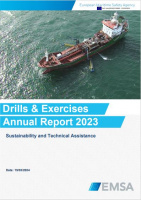
In order to provide additional support to the pollution response mechanisms of EU Member States in a cost efficient way, the European Maritime Safety Agency (EMSA) operates, in European waters, a range of oil pollution response services (PRS) consisting of a Network of stand-by oil spill response vessels, Equipment Assistance Service (EAS) arrangements, including specialised stand-alone ...
Read more...
Page 1 of 7
Related Activities – Ship Safety

Related Documents
- There are no items in this category