
Tag: Sustainability
-
Guidance Document: The EU ETS and MRV Maritime General guidance for shipping companies
Published20.02.2024
The Commission and the European Maritime Safety Agency are available to answer any queries from stakeholders in relation to the new requirements under the revised MRV Maritime Regulation and the EU ...
Read more... -
EMTER 2024 Stakeholder Consultation Workshop
Published25.01.2024
This WS will take place on Zoom on 14.02.2024. For further information download the WS agenda below.
Read more... -
Extension of EU ETS to maritime: information and resources
Published05.01.2024
Since 1 January 2024, CO2 emissions from shipping companies having ships of or above 5 000 gross tonnage, calling at or departing from ports in the European Economic Area (EEA), are part of the EU’s ...
Read more... -
ETS Extension to maritime
Published08.12.2023
From 1 January 2024, CO2 emissions from ships of and above 5 000 gross tonnage, calling at or departing from ports in the European Economic Area (EEA), no matter what flag they fly (EEA/non EEA), ...
Read more... -
Webinars & Tutorials
Published08.12.2023
To prepare maritime stakeholders and industry for the extension of the EU Emissions Trading System (EU ETS) to the maritime transport sector and the provisions of FuelEU Maritime, EMSA has created a ...
Read more... -
MRV Regulation
Published08.12.2023
In 2015, the decarbonisation of the maritime transport sector in the EU took an important first step forward with the entry into force of Regulation (EU) No 2015/757 on the Monitoring, Reporting and ...
Read more... -
2nd Workshop on Alternative Fuels (biofuels and ammonia) and Power Solutions for Shipping and Ports
Published05.12.2023Read more... -
New study: Potential of Wind-Assisted Propulsion for Shipping
Published27.11.2023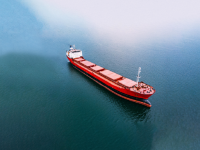
The potential of wind assisted propulsion systems as a power source in the shipping sector is analysed in a new report released by EMSA. Even though the total number of ships equipped with wind ...
Read more... -
Potential of wind-assisted propulsion for shipping
Published27.11.2023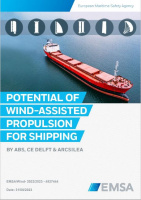
The maritime industry faces substantive challenges due to increasingly strict air emissions and climate legislation as its practitioners navigate the course towards decarbonisation. Among the broad ...
Read more... -
Alternative fuels and sources of power
Published22.11.2023On 28 and 29 November, EMSA will hold a workshop on alternative fuels and sources of power for shipping, which will be streamed live from our Lisbon headquarters. Two new studies on the potential of ...
Read more...
Page 4 of 14
Related Documents
- There are no items in this category